
Engineering, Inspection, & Capital Reserve Services

Our firm has been providing professional engineering, inspection, and capital reserve consulting services for over 60 years. Our reputation and our approach to all projects are based on two fundamental principles; quality engineering services and the highest level of customer service. 

About Becht

The Becht Advantage

Checkmark

Over 60 Years of Consulting Engineering

Checkmark

Reputations of Principals & Employee Owners

Checkmark

Responsiveness to Budgets & Time Schedules

Checkmark

Quality, Clarity, & Completeness of Drawings

Checkmark

Knowledge of State-of-the-Art Construction

Contact Us

Contact Us

Our Services

Engineers inspecting electrical panel

MEP&FP Engineering

Our firm provides mechanical, electrical, plumbing, and fire protection engineering services that are innovative in concept and economic in all trades.

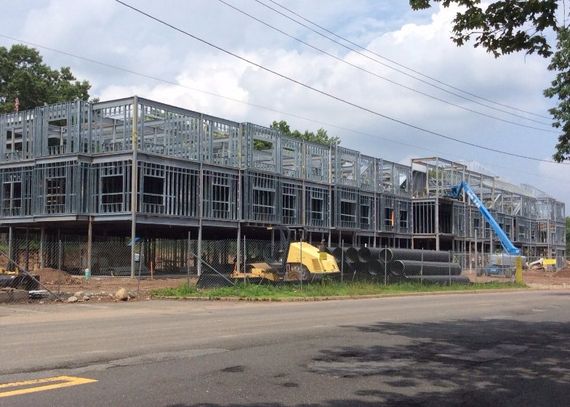
Construction of steel building

Structural Engineering

We provide a full range of structural engineering services, including inspections, investigations, and the design of new structures, structural corrections and rehabilitation of existing structures.

Multi-family residential building

Capital Reserve Studies

Our Capital Reserve Studies can improve your property’s financial planning and facilities management by providing a clear and understandable funding plan for future replacement of capital items.

Worker in a construction hat

Our employee owners will develop a clear and precise proposal to assist you in determining the most economical and effective way to resolve your properties' concerns.

News

Visit our blog for new innovations, projects, and firm updates.

multi-residential building with snow and ice on roof
January 28, 2026
Winter is here - and with it comes one of the most important signals your roof may be failing: ice damming. If you’ve noticed thick ridges of ice forming along your roofline, or you are experiencing leaks inside during freeze–thaw cycles, it could signal that a roof replacement is needed. Ice dams don’t just happen because of cold weather - they’re often a sign of: Aging shingles that can’t shed water properly Underlying roof damage or deterioration Poor or failing attic ventilation Insufficient insulation allowing heat to escape If not properly managed, ice damming may result in significant expenses by causing interior water damage, mold development, compromised gutters, and potential structural concerns.
Multifamily residential building
October 22, 2025
Please be advised that owners of covered buildings are required to submit annual benchmarking reports to the Maryland Department of the Environment (MDE) via the ENERGY STAR Portfolio Manager platform. The Maryland Building Energy Performance Standards (BEPS) aims to track energy use, achieve zero net direct GHG emissions by 2040, and boost building energy efficiency. Building owners may authorize a third-party agent to submit these reports on their behalf. Benchmarking reports submitted to MDE by September 1, 2025 and June 1, 2026 and beyond, will be deemed timely. A covered building is a commercial or multifamily residential building in the State of Maryland or is owned by the State of Maryland and has a gross floor area of 35,000 SF or more, excluding the parking garage area. Building owners can search for their buildings and reference number (Unique Building Identifier or UBID) at https://mdbeps.mde.state.md.us . This UBID must be entered in the ENERGY STAR Portfolio Manager. Beginning in 2026 and every five years thereafter, building owners are required to have a third party verify the accuracy of their benchmarking reports prior to submitting them to MDE. If a building owner already uses a third party to submit reports, that same entity may also fulfill the verification requirement. Regulatory requirements can be complex, but our engineers are able to assist with data collection, reporting, and compliance with verification requirements. Furthermore, our comprehensive team of engineers can design energy-efficient upgrades for building systems, aiming at optimizing performance and fostering healthier, more sustainable buildings throughout Maryland. If you have any questions or need assistance, please contact Becht today at 800.772.7991 or information@bechtbt.com to learn how we can assist you with your building’s benchmarking needs.
Condo building
September 9, 2025
IMPORTANT UPDATE: Enacted in January 2024, NJ S2760/A4384 (NJ Reserve Study Law) established new capital reserve study and funding requirements for most New Jersey Community Associations. On August 21, 2025, Governor Phil Murphy signed NJ Bill S3992 which amends New Jersey S2760/A4384 by updating funding requirements and offering additional funding options for Associations which may be underfunded. NJ Bill S3992 permits Associations to select between two main funding options outlined below. Option 1: Follow the Capital Reserve Study and fund their reserve account in accordance with Baseline, Threshold, or Component/Full Funding Scenarios. Option 2: An Association may now fund as little as 85% of the required funding for up to 5 years with specific disclosure obligations. This option for 85% funding is only allowed in the first 5 years after a reserve study is completed. After year 5, the Association must update their report and fund in accordance with either baseline, threshold, or component/full funding as shown in their Capital Reserve Study. Associations that choose the 85% option must also follow strict policies to notify current unit owners of the decision as well as possible future special assessments or loans which may be required to offset funding deficits. Sellers are also required to disclose this information to potential buyers. Other Important Notes: This bill defines "adequate" reserves as funds projected to not fall below zero over the Association's 30-year funding plan as outlined in the reserve study. Baseline funding meets the definition of “adequate” though it poses the greatest chance of an assessment or loan to make up for a shortfall. This legislation is intended to establish consistent financial planning and disclosure practices for Community Associations. Timetables to Consider: CAI recommends Capital Reserve Study updates every 3 years. NJ Law requires updates at least every 5 years at which time Associations must complete a professional reserve study with a site visit which analyzes anticipated maintenance and replacement costs, current fund balances, and current conditions of common elements to provide a 30-year cash-flow and funding projection. Our CAI Designated Reserve Specialists are available to provide guidance regarding these new amendments and to advise you on the necessary steps to achieve compliance.
Show More

Education

Our experts offer lunch & learns and webinars on a wide variety of topics.

Please contact us below with your interested topic.

Contact Us